
Most SBA Files Don’t Get Declined Because the Business Is Weak
Most people think SBA funding comes down to checking boxes. Register the business. File the tax returns. Pull together financial statements. Submit the application. Do those four things and you should be fine, right?
Lenders don’t see it that way, and that gap is where most SBA files actually die.
A lender isn’t reading your file line by line, checking each piece off a list. They’re reading it as one story — your structure, your numbers, your tax returns, your use of funds, the documentation behind all of it — and asking whether that story holds together. A business can have every required document sitting in the folder and still get declined, because having the pieces isn’t the same as having a file that makes sense as a whole.
That’s the part nobody explains clearly enough. So let’s actually explain it.
What a Lender Is Really Looking At
When an underwriter opens your file, they’re not scoring individual boxes. They’re checking whether these things agree with each other:
- Your business structure and SBA eligibility
- Your financial performance and cash flow
- Your tax returns, and whether they match what your financials claim
- Who’s actually running the business, and their experience doing it
- What you’re asking to borrow, and whether the reason holds up
- Whether the paperwork behind all of it is organized enough to trust
Every one of those can look fine on its own. Financials can look strong. Tax returns can look clean. And the file can still get flagged, because the lender isn’t asking “does each piece pass” — they’re asking “do these pieces tell the same story.” A capital request with no clear use of funds. Addbacks that seem reasonable but aren’t documented. Revenue that’s climbing without the operational structure to explain why. None of that means the business isn’t real or isn’t viable. It means the file wasn’t built to answer the questions a lender was always going to ask.
Why the Checklist Was Never the Whole Job
Filing your paperwork, registering your entity, pulling your financials together — none of that is wasted effort. It’s just not the same job as building a file a lender can actually approve. The checklist gets you to the starting line. What happens after that — whether the numbers, the narrative, and the documentation all point in the same direction — is what decides the outcome.
This is also why so many declines happen quietly, before anyone ever calls to ask a follow-up question. The file simply doesn’t survive the first read.
Building a File That Holds Together
None of this means your financials have to be perfect or your circumstances have to be ideal. It means the pieces actually have to fit — your numbers support what you’re asking for, your documentation tells one consistent story instead of several conflicting ones, your business structure matches what SBA eligibility requires, and your use of funds lines up with how a lender is trained to think about risk.
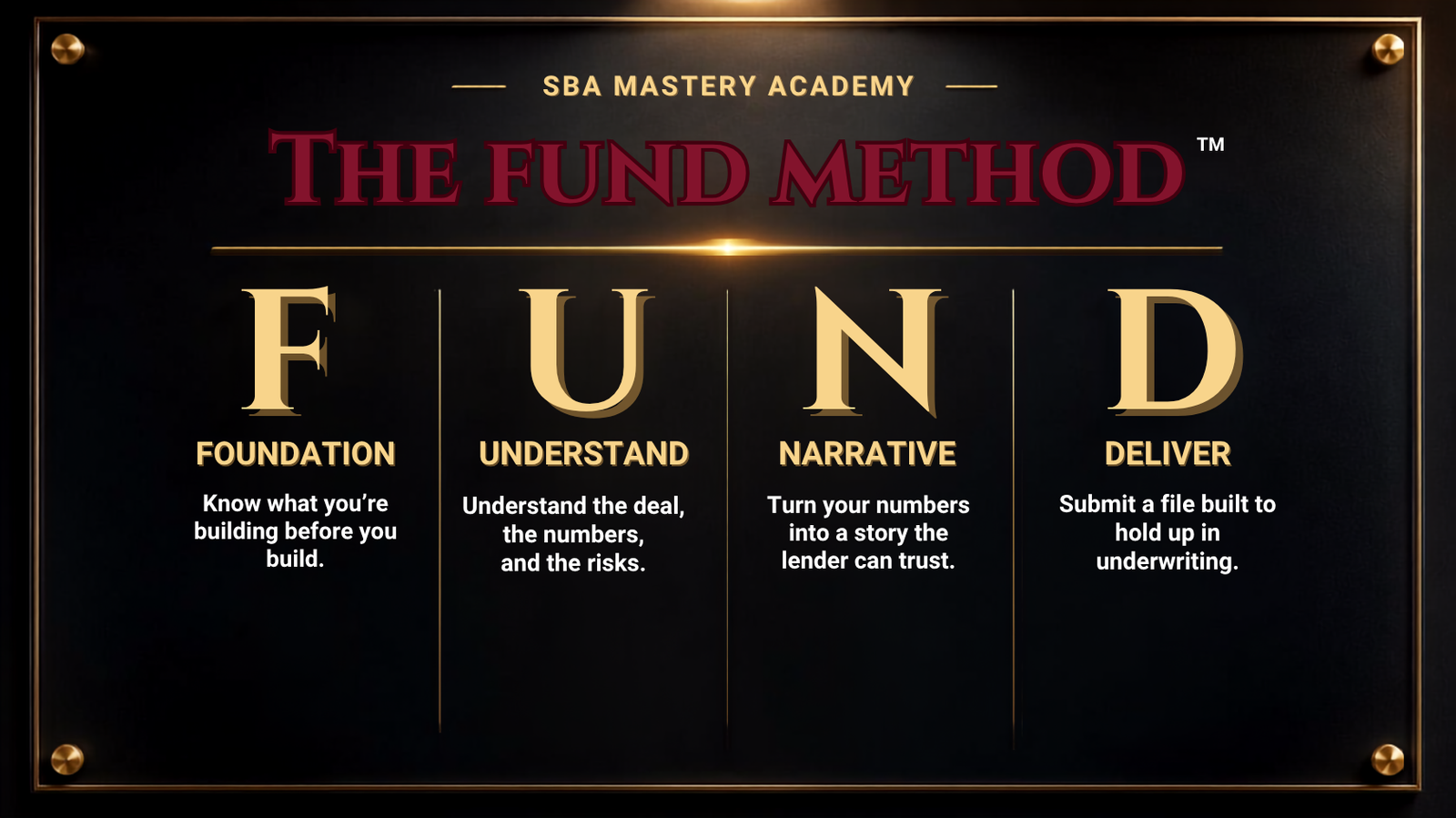
That’s the whole premise behind the FUND Method: Foundation, Understand, Narrative, Deliver.
Foundation is knowing what you’re actually working with before you build anything. Understand is reading your own numbers the way a lender will read them. Narrative is turning those numbers into a story that holds up instead of one that raises more questions than it answers. Deliver is submitting a file built to survive that first read, not one that’s hoping to.
The Real Question to Ask
Most people go into SBA funding asking “will I get approved?” That’s the wrong question, because it’s not something you can actually answer or act on before you apply. The better question — the one that actually changes what you do next — is “how would a lender read this file today?”
Answer that honestly, and you already know what needs to happen before you submit anything.
Ready to build the file, not just gather the paperwork? Explore SBA Mastery’s programs →